Category: Interviews

Iran’s Exiled Scholar Who Impeached Khamenei

An exiled Iranian mujtahid — imprisoned twice, banned across Iranian platforms, and teaching at Duke University — gives his most candid assessment of the Islamic Republic, Velayat-e Faqih, and what the Trump-Netanyahu war has done to Iran’s democratic reform movement.
He breaks down the two dimensions of the Islamic Republic — where it succeeded and where it failed — and shares his final position: a secular democratic state. He reveals why he impeached Khamenei, why Iran’s hardliners, US Republicans, and Israeli Zionists are aligned against peace, and why Trump bears responsibility for the war.

The ‘Ayatollah’ opposing US imperialism, and Iran’s Islamic ‘regime’

Kadivar offers a rare insider critique of Iran: opposing US imperialism and Israeli aggression, while also challenging the authoritarianism of the Islamic Republic from within Shia theology itself. He traces his own journey – arrested under both the Shah and the Islamic Republic – and explains how the revolutionary promise of freedom, democracy, and justice was only partially realized. We explore how guardianship of the jurist reshaped Iran. This conversation takes a deep look into how power, religion, personalities, and competing visions of destiny have interacted to make Iran, Iran.

The American side did not truly come to negotiate

L’Humanité. This war was directed against the Iranian people, the country’s territorial integrity, its civilization, and its culture, far more than against the Islamic Republic itself. This military aggression is a war of modern barbarism against a people and a country that refuse to submit to brute force, lawlessness, and injustice. This war has had an extremely negative impact on the democratic and liberation movement in Iran, delaying it indefinitely. Iranians firmly defend their homeland, while remaining fervent critics of the system in place. Velayat-e Faqih is a symbolic matter.

War will increase religious fundamentalism around the world

Iran’s movement for democracy and freedom has suffered a lot of damage. After the war, the country is ruled by the IRGC, not by the symbolic supreme leader. Most Iranians do not support the regime. But this invasion has strengthened Iranian hardliners and the IRGC. All these replacement commanders or political figures that are coming to power after Netanyahu’s foolish assassinations are harder-liners and more radical than those who were before. Netanyahu and Trump are spreading fundamentalism in the world. Their policies are against peace, international law, and American values.

Amid federal crackdown on free speech, Duke professor and Iranian dissident Mohsen Kadivar remains vocal

Criticizing the repressive Islamic Republic, he is against U.S. military action in Iran. The Islamic Republic of Iran failed, but liberal democracy in the U.S. and Europe failed in the same way. There is no international law, no ethics. As the Iranian Constitution was violated, the U.S. Constitution was violated too. I’m supporting justice, freedom, and peace for the world, for the U.S., for Iran, for Palestine, and everywhere. I’m a global citizen. I belong to humanity. The only thing I want is to have a better, more peaceful world.

“We don’t need a Supreme Leader”

Kadivar evaluates the future of Iran, characterizing the current authoritarian theocratic regime as a failing state that has lost its popular legitimacy. While he acknowledges the government’s continued resilience against immediate collapse, he argues that ‘systemic reform’ or a transition to a secular democratic republic is essential for the nation’s survival. Condemning any foreign aggressions, Kadivar emphasizes that the recent illegal Israel-US attacks have temporarily bolstered Iranian nationalism, while true stability requires the abolition of the Supreme Leader’s office. A national referendum allows citizens to choose between various political models.

Iran: The Domination of a Minority Over a Diverse Society

The back-breaking U.S. sanctions impact the lower classes far more than the theocratic regime or the IRGC. The major problem in Iran is the domination of an ideological minority over a diverse society. While the regime pours resources into regional ambitions, domestic discontent grows, poverty, repression, and a generation that rejects the politicization of religion. Most Iranians today overwhelmingly prioritize national interests. Palestinians have the right to their land, their country, and their sovereignty. U.S. military aid to Israel has been used to support acts of genocide and ethnic cleansing.

Shari’a, Fiqh and Islamic Jurisprudence. Is there Space for a Reform?

“Major elements of Islamic Shari’a are human dignity, justice, fairness and freedom: there is no force, no compulsion in the case of faith and religion.” An excerpt from the first part of ResetDOC’s latest video-interview with Mohsen Kadivar, Professor of Islamic Studies at Duke University, on pluralism in Islam.

Islam and Modernity

Crossroads: Islam and the Theological Origins of Modernity. Transformative Ideas: A Dialogue between Michael A. Gillespie (Professor of Political Science) and Mohsen Kadivar (Research Professor in the Department of Religious Studies): How did Western Europe arrive at modernity? Islam’s perspective on modernity, including what philosophical movements responded to nominalism and modernity on a theological level, and how Islamic societies and peoples have more broadly responded. How Western and Islamic perspectives are coming into closer contact, particularly with immigration to Western Europe and the global human rights framework that has arisen.

In support of Protests in Iran

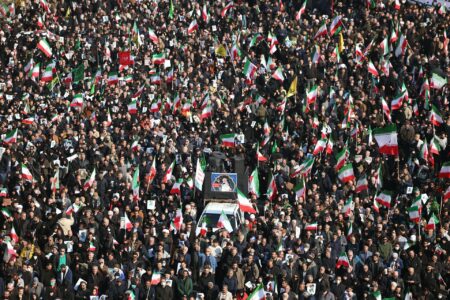
This is the fourth big protest since 2019 in Iran. Iranians are outraged with grievances that won’t soon go away. This is not only about freedom for women (especially their hair covering), but freedom for the country from the ruling of the minority over the majority, freedom of a style of life, against the mandatory style of life. The majority of Iranians support a democratic, secular regime. The government blocked all the ways of reforms. There’s no way for the people, except to come to the streets and protest.