Tag: Human Rights

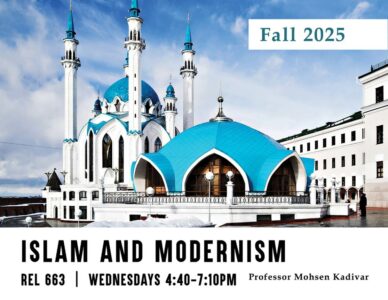
Islam and Modernism

Why is the experience of Muslims about modernization and modernity different from Western modernization and modernity? Why do we have modernities (plural), not modernity (singular)? How did modernity divide Muslims into conservative or traditionalists, fundamentalists or revolutionaries, quasi-conservatives, reformists, and revisionists? How does each of these five camps introduce Islam? This course tries to respond to such questions, as the key questions of Islam and modernism. We focus on the 19th, 20th, and 21st centuries’ main debates, tensions, responses, and adaptations, and cover the major classics of this period.
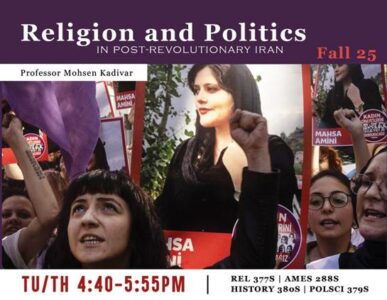
Religion and Politics In Post-Revolutionary Iran

This course will narrate a fair and balanced critical and historical analysis, and is organized into five thematic sections: a brief overview of the relationship between religion and politics in Iran, an intellectual history of the Islamic Republic, examining the concept of the “sacred as secular” and exploring the dynamics of secularization within a theocratic system, the governance in the name of Islam, focusing on theology and theocratic rule in the Islamic Republic, and the revolt against theocracy: the Mahsa Movement and the feminist uprising against theocracy in Iran.

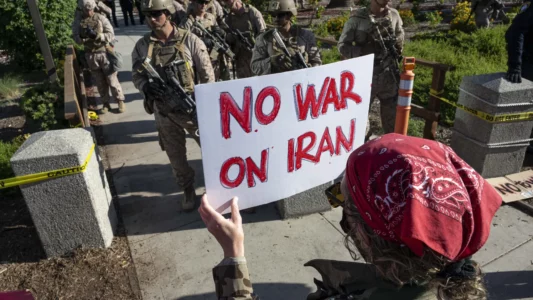
The Grave Mistake of an American War on Iran

U.S. involvement in Israel’s illegal war against Iran runs counter to the core slogan of “America First” and marks a shift to “Israel First.” President Trump could repeat the mistakes of Presidents Eisenhower and Bush and go down in history as the first American president to launch a military attack on Iran. This would kill civilians and return many coffins to America. The United States, like Israel, would further its legacy in the Middle East as a symbol of injustice, lawlessness, immorality, and the violation of dignity, ethics, and humanity.

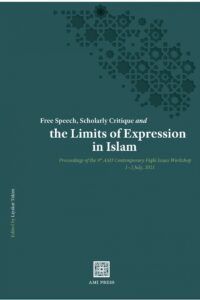
Free Speech and Critique of Religion in Contemporary Islam

While the Qur’an and the practical tradition of the Prophet strongly support freedom of expression and critique of religion, serious obstacles to the realization of freedom of expression and critique of religion are not easily deniable in the hadiths, conventional Islamic sciences, and the lived experiences of Muslims throughout the history. There is no red line or any restrictions for a scholarly critique of Islam in academic circles, while for the mass audience, there are restrictions that will not shake the faith of people due to weak public information.

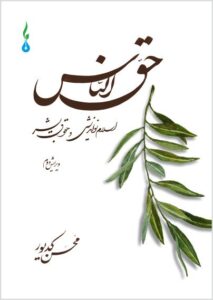
The Rights of Mankind: Human Rights and Reformist Islam

Anything that we call Islamic today must be reasonable, just, moral, and more functional according to the conventions of the present time. The main problem of traditional Islam is that it is living in the 21st century while breathing in the atmosphere of several centuries ago. It is possible to have a reading of the Qur’an and the Tradition of the Prophet and a methodology in ijtihad and jurisprudence that is consistent with the criteria of human rights. A critical and detailed introduction has been added to the new edition.

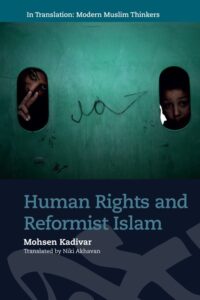
Human Rights and Reformist Islam

Human Rights and Reformist Islam translates the influential collection Haqq al-nas, and critiques traditional Islamic approaches to the question of compatibility between human rights and Islam, and argues instead for their reconciliation from the perspective of a reformist Islam. The book focuses on six controversial case studies: religious discrimination; gender discrimination; slavery; freedom of religion; punishment of apostasy; and arbitrary or harsh punishments. Critically compares Kadivar’s approach to Islam and human rights with those of five leading contemporary scholars: Mahmoud Taha, Abdullahi an-Na’im, Ann Mayer, Mohammad Shabestari and Abdulaziz Sachedina.