Tag: Islamic Law

The Genealogy of the Death Penalty for Apostasy and Blasphemy in Islam

This talk examines the historic invention and spreads reports attributed to the Prophet in support of a criminal penalty for apostasy in Islamic law. The texts are weak, have no known chain of transmitters, and were often isolated. Furthermore, these texts directly contradict the Quran, which condemns but never mentions any criminal punishment for blasphemy, apostasy, or leaving Islam. This talk explores the process of the creation and dissemination of a serious criminal penalty that seems to be based on authentic Islamic texts, but a close review reveals was not.

Shari’a, Fiqh, and the possibility/impossibility of Islamic Law

Shari’a (the Islamic style of life) will continue strongly. Fiqh will continue in worship and rituals, quasi-rituals, the principle of human interactions, and many parts of civil fiqh, including fiqh of the family, with observing gender equality and religious equality. Islamic law may be used in civil law and commercial law by observing four criteria (reasonability, justice, morality, and functionality). Other branches of law are counted as impossible. The cost of Islamizing them is much greater than leaving them to secular law while respecting Islamic ethics in these areas.

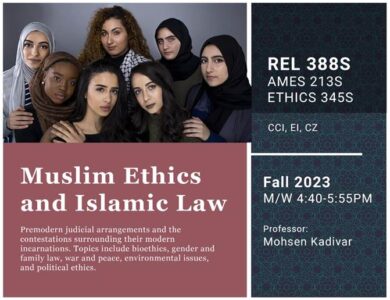
MUSLIM ETHICS AND ISLAMIC LAW

Understanding the shari‘a is key to understanding the Islamic tradition. The ethical debates impact policy questions ranging from gender, democratic citizenship, technology, and sexual violence to matters related to the ethics of war and peace. We will be attentive to the confluence of various discourses: history, politics, and anthropology in dialogue with the interpretative regimes of Islamic discourses. Ethics provide maps of the histories of interpretative communities and allow us to identify the various typologies as well as trajectories of the Muslim subject in the present and the past.

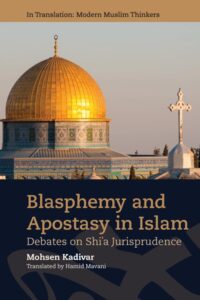
Blasphemy and Apostasy in Islam

Take a front-row seat to the debate on blasphemy and apostasy in Islam: a. Presents a back-and-forth debate between two Shi’a jurists (one conservative, one reformist) that locates the exact points of controversy surrounding apostasy and blasphemy; b. Engages with the broader subjects of religious freedom and human rights, addressing both secular and religious interests; c. Articulates the secular–religious divide and proposes a pluralistic solution, making a case that apostasy and blasphemy are non-existent in the Qur’an; d. Packed with translations of primary sources, including fatwas and interviews.