

Tag: Jurisprudence

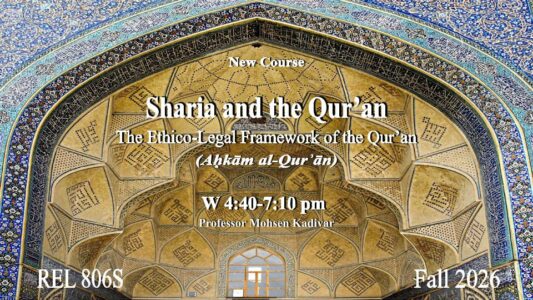
Sharia and the Qur’an

The course examines Sharia—the Qur’an’s ethical and legal frameworks—through primary sources. It thematically and chronologically analyzes verses on morality, ritual, and human interaction. Students explore the Aḥkām al-Qurʾān genre across legal schools in original languages using a holistic, historical-critical approach. Alongside jurisprudence, the course delves deeply into Qur’anic morality and the ethical implications of key terms such as mercy, justice, fairness, and dignity, emphasizing the Qur’an’s enduring ethical and legal principles. Students will learn to apply holistic and historical-critical methods that examine all related verses collectively and contextually.
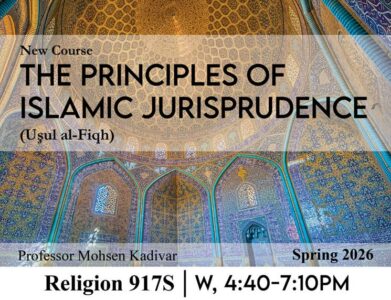
The Principles of Islamic Jurisprudence

This course offers a comprehensive study of the principles of jurisprudence, a foundational discipline for all Islamic narrative sciences. Students examine four main areas: Language and Meaning, addressing textual interpretation; Rational Correlations, exploring the role of reason in deriving rulings; Authority, assessing valid sources of law and their evidentiary weight; and Procedural Principles, guiding legal reasoning lacking clear proof. The course combines close reading of a major original text—Arabic proficiency required—and analysis of modern English-language scholarship. Emphasis is placed on historical development, theoretical foundations, and comparative perspectives.

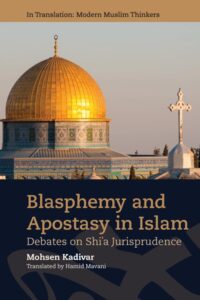
Blasphemy and Apostasy in Islam

Take a front-row seat to the debate on blasphemy and apostasy in Islam: a. Presents a back-and-forth debate between two Shi’a jurists (one conservative, one reformist) that locates the exact points of controversy surrounding apostasy and blasphemy; b. Engages with the broader subjects of religious freedom and human rights, addressing both secular and religious interests; c. Articulates the secular–religious divide and proposes a pluralistic solution, making a case that apostasy and blasphemy are non-existent in the Qur’an; d. Packed with translations of primary sources, including fatwas and interviews.