
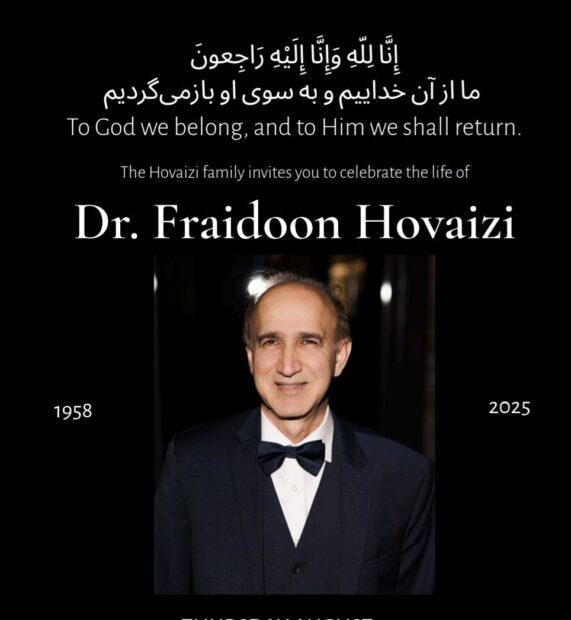
Memorial of Fraidoon Hovaizi
This presentation was delivered at the 40th Majles—a gathering held in remembrance and celebration of the life of my friend, Dr. Fraidoon Hovaizi—at the University of Virginia in Charlottesville on August 15, 2025.
بسم الله الرحمن الرحیم
الحمدلله ربّ العالمین، والصلوة والسلام علی جمیع الانبیاء والمرسلین سیما خاتمهم وافضلهم، سیدنا ومولانا ومقتدانا ابی القاسم محمد وعلی آله الطیبین الطاهرین واصحابه المنتجبین
قال الله تبارک و تعالی فی کتاب الکریم: أعوذ بالله من الشیطان الرجیم
وَبَشِّرِ الصَّابِرِينَ، الَّذِينَ إِذَا أَصَابَتْهُم مُّصِيبَةٌ، قَالُوا إِنَّا لِلَّهِ وَإِنَّا إِلَيْهِ رَاجِعُونَ، أُولَٰئِكَ عَلَيْهِمْ صَلَوَاتٌ مِّن رَّبِّهِمْ وَرَحْمَةٌ، وَأُولَٰئِكَ هُمُ الْمُهْتَدُونَ
Give good news to those who are steadfast, those who say, when afflicted with a calamity, ‘We belong to God and to Him we shall return.’ These will be given blessings and mercy from their Lord, and it is they who are rightly guided. (Q. 2:155-157)
We have gathered here to honor the memory of a father, a husband, a brother, a grandfather, a friend, a devoted member of the community, a sincere Muslim, and a good servant of God. A person who, although in our view left this world too soon, lived a good life. We have come to pray for God’s mercy and forgiveness for him, to pray for patience for his loved ones, to speak of his virtues, to learn from his life, and to keep his memory alive by continuing his path.
It is customary to begin such gatherings with thanks to God and reflections on death and the Hereafter, accompanied by verses from the Holy Qur’an and sayings of the Prophet and the Imams of Ahl al-Bait.
کُلُّ نَفْسٍ ذَائِقَةُ الْمَوْتِ ثُمَّ إِلَيْنَا تُرْجَعُونَ
Every soul will taste death, then it is to Us that you will be returned. (Q. 29:57)
وَمَا تَدْرِي نَفْسٌ مَّاذَا تَكْسِبُ غَدًا، وَمَا تَدْرِي نَفْسٌ بِأَيِّ أَرْضٍ تَمُوتُ، إِنَّ اللَّهَ عَلِيمٌ خَبِيرٌ
No soul knows what it will reap tomorrow, and no soul knows in what land it will die; it is God who is all-knowing and all-aware. (Q. 31:34)
تَبَارَكَ الَّذِي بِيَدِهِ الْمُلْكُ، وَهُوَ عَلَىٰ كُلِّ شَيْءٍ قَدِيرٌ، الَّذِي خَلَقَ الْمَوْتَ وَالْحَيَاةَ، لِيَبْلُوَكُمْ أَيُّكُمْ أَحْسَنُ عَمَلًا، وَهُوَ الْعَزِيزُ الْغَفُورُ
Exalted is He who holds all control in His hands; who has power over all things; who created death and life to test you [people] and reveal which of you does best––He is the Mighty, the Forgiving. (Q. 67:1-2)
A memorial service is, in fact, a gathering of remembrance (مجلس الذکر). Death is a reminder of the path we all must take—sooner or later, each of us will personally experience it. Death is the other side of life. There is no escaping it; eventually, it will come for all of us. We must understand its reality, make peace with it, and prepare ourselves for the meeting with it.
We are saddened by the death of our loved ones—rightfully so. We have lived with them for years, and their presence is felt everywhere in the home. It is very hard to endure their absence. Yet neither our coming into this world nor our departure from it is in our own control. All we can do is accept God’s will and be patient in the face of loss. Of course, the passing of a loved one has two aspects: for the survivors, it is often seen as a tragedy, but for the one who has departed—if they were a righteous believer—their departure is not a tragedy at all, but the beginning of joy, comfort, and peace. If the deceased was not a person of faith and good deeds, the matter is reversed, and the Hereafter becomes a true tragedy for them.
قال سید الشهداء الامام حسين بن علی (ع): فما الموتُ إلّا قنطرةٌ، تُعَبِّرُ بكم عن البُؤس والضُرّ إلى الجِنان الواسعة والنِعمِ الدّائمة، فأيُّكم يَكرَه أن يَنتقلَ من سِجنٍ إلى قصر؟ وهو لأعدائكم كمن ينتقل من قصر إلى سجن وعذابٍ أليم، إنّ أبي حدّثني بذلك عن رسول اللّه (ص): الدّنيا سجن المؤمن وجَنّة الكافرِ، والموتُ جِسر هؤلاء إلى جنّاتهم وجِسر هؤلاء إلى جحيمهم
“Death is nothing but a bridge that carries you from misery and hardship to vast gardens and eternal blessings. Which of you would dislike moving from a prison to a palace? As for your enemies, it is like moving from a palace to a prison and painful torment. My father told me this from the Messenger of God (PBUH): ‘The world is the prison of the believer and the paradise of the disbeliever, and death is the bridge for these to their gardens, and the bridge for those to their Hellfire.’
وقال رجل لأبي ذرّ: «ما بالنا نَكره الموتَ؟ فقال: لأنّكم عمّرتم الدّنيا وخرّبتم الآخرة، فتَكرهون أن تنتقلوا من عِمران إلى خراب؛ وقيل له كيف ترى قدومَنا على اللّه؟ قال: أمّا المحسن، فكالغائب يقدَِّم على أهله، وأمّا المسيء، فكالآبق يقدِّم على مولاه، قيل: فكيف ترى حالنا عند اللّه؟ قال: أعرِضوا أعمالكم على الكتاب، إنّ اللّه عزّ وجلّ يقول: «إِنَّ الْأَبْرارَ لَفِي نَعِيمٍ. وَإِنَّ الْفُجَّارَ لَفِي جَحِيمٍ» قال الرّجل: فأين رحمة اللّه؟ قال: رحمة اللّه قريب من المحسنين
A man said to Abū Dharr: “Why is it that we dislike death?” He said: “Because you have built up the world and ruined the Hereafter, so you hate to move from prosperity to desolation.” He was asked, “How do you see our arrival before God?” He said: “As for the righteous, it is like a traveler returning to his family; as for the sinner, it is like a runaway slave being returned to his master.” He was asked, “How do you see our situation with God?” He said: “Compare your deeds to the Book, for God Almighty says: ‘Indeed, the righteous will be in bliss, and indeed, the wicked will be in Hellfire.’” The man asked: “Where, then, is the mercy of God?” He replied: “The mercy of God is near to the doers of good.”
قال رسول الله (ص): موت الفُجأة راحة للمؤمن وأسفٌ علی الفاجر
“Sudden death is a relief for the believer and a grief for the wicked.”
Every human being, whether believer or atheist, passes through four stages of life:
First, the fetal stage. Each of us lived for nine months in our mother’s womb, an aquatic being in a narrow, dark place, nourished by our mother’s very essence, growing flesh and bone. Around the fourth month, God breathes the soul into us. Upon birth, the first thing we do is cry.
Second, earthly life. We have lived for several decades in this world. Compared to the womb, the world is vast. We have freedom and choice—we can be believers or atheists, righteous or corrupt. Earthly life is limited and filled with pain and suffering. We face natural disasters such as illness, floods, and earthquakes, and human evils such as war, crime, murder, racism, and oppression. For the believer, the world is not the final destination but an inn for a short stay. If someone mistakes this inn for their eternal home and clings to it, they are gravely mistaken.
Third, the realm of the grave—also called the Barzakh (limbo). This begins from burial until the Resurrection, when the trumpet of Israfil is blown and, by God’s command, the dead are revived. The grave is a narrow, dark place underground; the body soon decays, but the soul does not die. The soul experiences Barzakh-life in reward or punishment according to one’s deeds in this world. A believer who mixed good deeds with sins will endure some punishment in Barzakh before entering a blissful Hereafter. For a faithless wrongdoer, punishment begins at death.
Fourth, the Hereafter or Resurrection. After the Day of Judgment, each person goes to Paradise or Hell in accordance with their faith and deeds. The path to Paradise passes through Hell. Paradise and its blessings are built by our faith and righteous actions; Hell and its torments are built by our lack of faith and bad deeds. In the Hereafter, the true reality of our beliefs and actions becomes clear. The length of one’s stay in Hell depends on the deficiencies in faith or the corruption of our deeds (sins). This stay can be very short or very long. Once a person is fully purified from the darkness of sin and disbelief, they receive the eternal pass to Paradise. The life of the Hereafter is eternal.
This is the Islamic view of humanity’s four stages of life, and Christianity, more or less, shares this view. From the perspective of a Muslim or monotheist, death is not the end of life but a transition from a limited life to two other stages, the final one is permanent. Human knowledge, science, and reason can tell us about the fetal stage and earthly life, but to navigate this world properly, we must follow divine revelation and the Scripture. The Barzakh and the Hereafter are beyond the reach of human reason and science, and the only source of knowledge about them is divine revelation, the Qur’an, and the Prophet. Philosophy can only establish the necessity of an afterlife, not more. Even an atheist will enter the Barzakh and the Hereafter. If death were truly the end and there was no afterlife, life would be unjust, unfair, and filled with evil. This concludes the first part of my remarks.
The second part is examples of Islamic teachings from the sayings of the Prophet and the Imams of Ahl al-Bait about a faithful life. I have chosen these seven because I believe our dear recently departed embodied some of these qualities in his own life.
قَالَ النَّبِيُّ ص: نَوِّرُوا بُيُوتَكُمْ بِتِلَاوَةِ الْقُرْآنِ وَلَا تَتَّخِذُوهَا قُبُوراً كَمَا فَعَلَتِ الْيَهُودُ وَالنَّصَارَى صَلَّوْا فِي الْكَنَائِسِ وَالْبِيَعِ وَعَطَّلُوا بُيُوتَهُمْ فَإِنَّ الْبَيْتَ إِذَا كَثُرَ فِيهِ تِلَاوَةُ الْقُرْآنِ كَثُرَ خَيْرُهُ وَاتَّسَعَ أَهْلُهُ وَأَضَاءَ لِأَهْلِ السَّمَاءِ كَمَا تُضِيءُ نُجُومُ السَّمَاءِ لِأَهْلِ الدُّنْيَا
“Illuminate your homes with the recitation of the Qur’an, and do not turn them into graves as the Jews and Christians did; they prayed in synagogues and churches but neglected their homes. Indeed, when Qur’an recitation becomes frequent in a house, its goodness increases, its inhabitants prosper, and it shines for the people of the heavens as the stars of the sky shine for the people of the earth.”
قَالَ رَسُولُ اللَّهِ ص: التَّوَدُّدُ إِلَى النَّاسِ نِصْفُ الْعَقْلِ
“Showing affection toward people is half of intelligence.”
قَالَ رَسُولُ اللَّهِ ص: أَكْثَرُ مَا تَلِجُ بِهِ أُمَّتِيَ الْجَنَّةَ تَقْوَى اللَّهِ وَحُسْنُ الْخُلُقِ
“The most common way my community will enter Paradise is through piety toward Allah and good character.”
قَالَ رَسُولُ اللَّهِ ص: يَا بَنِي عَبْدِ الْمُطَّلِبِ، إِنَّكُمْ لَنْ تَسَعُوا النَّاسَ بِأَمْوَالِكُمْ فَالْقَوْهُمْ بِطَلَاقَةِ الْوَجْهِ وَحُسْنِ الْبِشْرِ
“O sons of ‘Abd al-Muṭṭalib, you will never be able to satisfy the people with your wealth, so meet them with cheerful faces and pleasant demeanor.”
قالَ رَسُولُ اللَّهِ ص: مَنْ أَصْبَحَ لَا يَهْتَمُّ بِأُمُورِ الْمُسْلِمِينَ فَلَيْسَ بِمُسْلِمٍ
“Whoever wakes up not caring about the affairs of the Muslims is not a Muslim.”
قَالَ الصادق ع: يَحِقُّ عَلَى الْمُسْلِمِينَ الِاجْتِهَادُ فِي التَّوَاصُلِ وَالتَّعَاوُنُ عَلَى التَّعَاطُفِ وَالْمُوَاسَاةُ لِأَهْلِ الْحَاجَةِ وَتَعَاطُفُ بَعْضِهِمْ عَلَى بَعْضٍ، حَتَّى تَكُونُوا كَمَا أَمَرَكُمُ اللَّهُ عَزَّ وَجَلَ رُحَماءُ بَيْنَهُمْ مُتَرَاحِمِينَ مُغْتَمِّينَ لِمَا غَابَ عَنْكُمْ مِنْ أَمْرِهِمْ، عَلَى مَا مَضَى عَلَيْهِ مَعْشَرُ الْأَنْصَارِ عَلَى عَهْدِ رَسُولِ اللَّهِ ص
“It is incumbent upon Muslims to strive to maintain connection, cooperate in compassion, support those in need, and show mutual care for one another so that you may be as Allah Almighty has commanded: ‘Merciful among themselves,’ showing mutual mercy, and feeling sorrow for what you do not know of each other’s circumstances, just as the community of the Anṣār did during the time of the Messenger of Allah (PBUH).”
قَالَ الصادق ع: وَمَنْ قَضَى لِأَخِيهِ الْمُؤْمِنِ حَاجَةً قَضَى اللَّهُ عَزَّ وَجَلَّ لَهُ يَوْمَ الْقِيَامَةِ مِائَةَ أَلْفِ حَاجَةٍ مِنْ ذَلِكَ، أَوَّلُهَا الْجَنَّةُ
“Whoever fulfills the need of his believing brother, Allah Almighty will fulfill for him one hundred thousand needs on the Day of Resurrection, the first of which is Paradise.”
The third part is my personal memories of the late Dr. Fraidoon Hovaizi. At the end of August 2008, at the invitation of Professor Abdulaziz Sachedina, my wife and I, along with our daughter, came from Tehran to teach at the University of Virginia. I take this opportunity to pray for the health, quick recovery, and long, honorable life of Professor Sachedina. It was the blessed month of Ramadan. Introduced by Professor Sachedina, we arrived at Dr. Hovaizi’s home at midnight. Dr. Hoveizi and his wife, Dr. Shahnaz Qasemi, warmly welcomed us, and we stayed with them for several days until we moved into the house we had rented through the university. Dr. Hovaizi, like a kind brother, helped me with all matters—opening a bank account, enrolling my child in high school, arranging taxes, and buying a car. Such help is invaluable to a newcomer.
On Friday nights, he hosted a weekly Qur’an study circle at his home—a gathering for Iranian doctoral students—which was very beneficial for their understanding of Islamic teachings and the Qur’an. For me, it was a continuation of my spiritual life in a foreign land. Dr. Fraidoon Hovaizi (1958-2025), an economist and an Iranian Arab born in Khuzestan, was fluent in Persian, Arabic, and English, and played a unique role in the Muslim community of Charlottesville. He gave significant advice and assistance to Arab, Iranian, and Afghan immigrants, and I personally witnessed this. The appreciation of this community is evident in this distinguished gathering.
Nine months later, I went to teach at Duke University in North Carolina, but our family’s friendship with Dr. Hovaizi continued. My wife and I would often return to Charlottesville to renew ties, and Dr. Hovaizi and his wife visited us several times. One of our sweetest shared memories was the Shar’ī wedding ceremony of Dr. Neda Hovaizi and Dr. Sirous Ahmadi Yazdi, held in our home. Until the last days of his blessed life, I was in contact with Dr. Hovaizi. His gentle voice carried hope. When his wife’s trembling voice told me, “Pray for Fraidoon,” it was a hard day for me, my wife, and my children. I am mourning a dear brother.
I extend my condolences on the passing of this benevolent and devoted man, Dr. Fraidoon Hovaizi, to his wife Dr. Shahnaz Qasemi, his daughters, Dr. Neda Hovaizi and Dr. Mona Hovaizi, his sister, Ms. Hoda Hovaizi, his brother, Fo’ad Hovaizi, his young grandchildren, Rayan, Roksana, Dãriyan, and Diyan, his sons-in-law, Dr. Sirous Ahmadi Yazdi and Dr. Mohammad Ali Mojarrad, the Muslim community of Charlottesville, and all who loved him. I pray for great patience and reward for them all. That the Hovaizi family has asked that the cost of flowers for the ceremony be donated to the oppressed people of Gaza is a clear sign of continuing Dr. Hovaizi’s path. Fereydoun’s heartbeat until the end was for the freedom of Iran and Palestine.
He lived happily and died happily. عاش سعیدا ومات سعیدا
رحم الله من یقرأ الفاتحة مع الصلوات
والسلام علیکم ورحمة الله وبرکاته
