

Tag: Avicenna

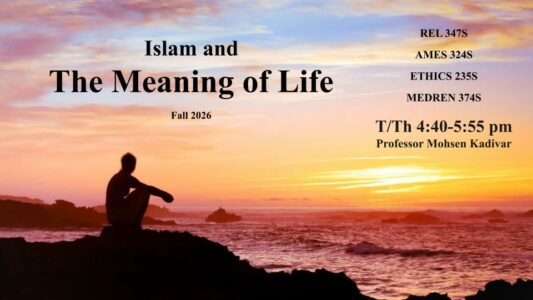
Islam & The Meaning of Life

The course explores how Islamic thought engages questions such as: What is the ultimate purpose of human existence? What is true happiness? How can human beings overcome alienation and find inner peace? How are faith and reason related in the search for meaning? What grounds moral obligations, justice, and human dignity? And how does belief in God shape the understanding of human destiny? The course approaches the meaning of life from three complementary perspectives within Islamic intellectual tradition: The Qur’anic perspective, the mystical perspective, and the philosophical and rational-theological perspective.
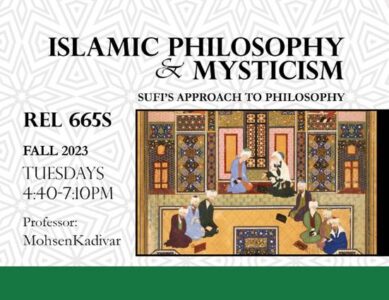
Islamic Philosophy and Mysticism (Sufi’s Approach to Philosophy)

This course focuses on Sufi’s approach to philosophy, especially on the Philosophy of Illumination of Suhrawardi and The Transcendent Philosophy of Mulla Sadra. The course starts with an introduction to the philosophy of Suhrawardi, and Mulla Sadra as well as the mystical works of Avicenna, al-Gazali, and Ibn Tufail. The main body of the course is studying and analyzing symbolic and mystical recitals of Avicenna, Suhrawardi, Gazali, Ibn Tufail, and others. We try to examine the key themes of philosophy, Sufism, and philosophical Sufism through these symbolic and mystical recitals.

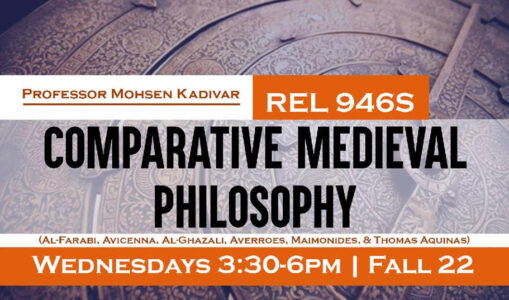
Comparative Medieval Philosophy

Medieval philosophy is a prerequisite to understanding the theology of Abrahamic traditions, metaphysics, philosophical psychology, and political philosophy. We will focus on six top philosophers: Alfarabi, Avicenna, al-Ghazali, Averroes, Maimonides, and Thomas Aquinas. After discussing general information about two translation movements, these distinguished philosophers, their works, and their philosophical innovations through the translation of a few of their major works, we will focus on comparative studies on three important subjects: God, creation, and freedom in three Abrahamic traditions, focusing on Avicenna, Averroes, Maimonides, and Aquinas in detail.