Tag: democracy

Professor Nasr: A Tribute and a Reflection

Professor Seyyed Hossein Nasr is among the most influential interpreters of Islam in the Western academy. Through dozens of books and hundreds of scholarly articles and lectures, he has conveyed a compelling, compassionate, and intellectually vibrant vision of Islam. I regard Professor Nasr as one of the foremost exponents of “Rahmani Islam”—the Islam of Compassion. Professor Nasr is a source of pride for Iran, Islam, and Shiʿism in the contemporary world. His many virtues far outweigh his few shortcomings—and who among us is free from error?

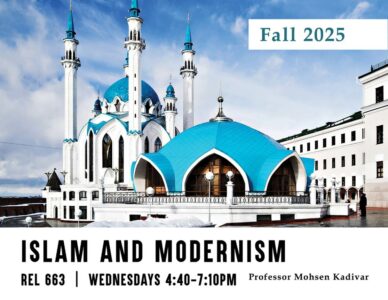
Islam and Modernism

Why is the experience of Muslims about modernization and modernity different from Western modernization and modernity? Why do we have modernities (plural), not modernity (singular)? How did modernity divide Muslims into conservative or traditionalists, fundamentalists or revolutionaries, quasi-conservatives, reformists, and revisionists? How does each of these five camps introduce Islam? This course tries to respond to such questions, as the key questions of Islam and modernism. We focus on the 19th, 20th, and 21st centuries’ main debates, tensions, responses, and adaptations, and cover the major classics of this period.

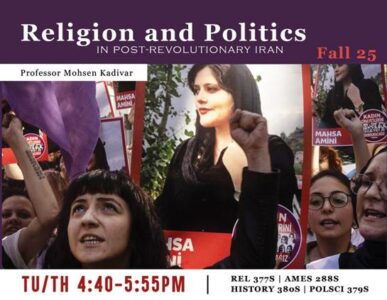
Religion and Politics In Post-Revolutionary Iran

This course will narrate a fair and balanced critical and historical analysis, and is organized into five thematic sections: a brief overview of the relationship between religion and politics in Iran, an intellectual history of the Islamic Republic, examining the concept of the “sacred as secular” and exploring the dynamics of secularization within a theocratic system, the governance in the name of Islam, focusing on theology and theocratic rule in the Islamic Republic, and the revolt against theocracy: the Mahsa Movement and the feminist uprising against theocracy in Iran.

Iran: The Domination of a Minority Over a Diverse Society

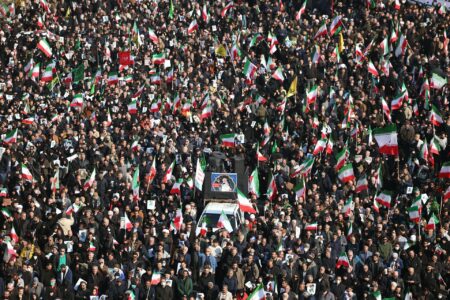
The back-breaking U.S. sanctions impact the lower classes far more than the theocratic regime or the IRGC. The major problem in Iran is the domination of an ideological minority over a diverse society. While the regime pours resources into regional ambitions, domestic discontent grows, poverty, repression, and a generation that rejects the politicization of religion. Most Iranians today overwhelmingly prioritize national interests. Palestinians have the right to their land, their country, and their sovereignty. U.S. military aid to Israel has been used to support acts of genocide and ethnic cleansing.