
Tag: Dignity

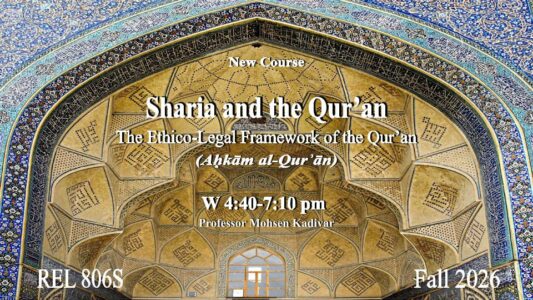
Sharia and the Qur’an

The course examines Sharia—the Qur’an’s ethical and legal frameworks—through primary sources. It thematically and chronologically analyzes verses on morality, ritual, and human interaction. Students explore the Aḥkām al-Qurʾān genre across legal schools in original languages using a holistic, historical-critical approach. Alongside jurisprudence, the course delves deeply into Qur’anic morality and the ethical implications of key terms such as mercy, justice, fairness, and dignity, emphasizing the Qur’an’s enduring ethical and legal principles. Students will learn to apply holistic and historical-critical methods that examine all related verses collectively and contextually.
Human Dignity / Karāmah

According to the Qur’an, human dignity is universal, regardless of religion, sect, piety, gender, race, and color. It is an essential character of humanity, allowing humans to take on the role of stewardship. The human soul is the bearer of dignity and has the potential to reason and distinguish between good and evil. The human species is noble because of the soul that God breathed into it. Human dignity and human original nature (fiṭrah) are two sides of one coin. There is a link between divine trust and human dignity.

Human Action Within Divine Creation, A Muslim Perspective

My goal is to demonstrate how Muslims in twelve schools of thought, especially at the present time, understand human action within divine creation. In mainstream Islamic thought, the lesson of the Qurʾān is that human action is attributed to God and to the human agent simultaneously. The human agent has free choice in his acts. Human free choice and power are based on God’s power, providence, will and permission. In their existence and in all aspects and affairs of their lives, including their acts, human beings are not independent of God.