
Tag: Ethics

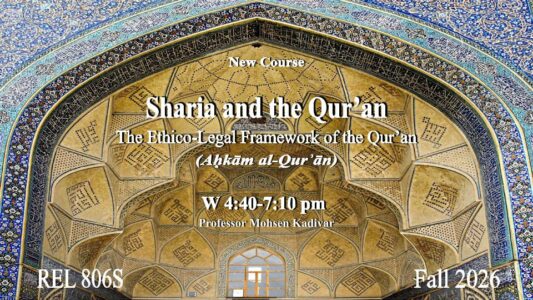
Sharia and the Qur’an

The course examines Sharia—the Qur’an’s ethical and legal frameworks—through primary sources. It thematically and chronologically analyzes verses on morality, ritual, and human interaction. Students explore the Aḥkām al-Qurʾān genre across legal schools in original languages using a holistic, historical-critical approach. Alongside jurisprudence, the course delves deeply into Qur’anic morality and the ethical implications of key terms such as mercy, justice, fairness, and dignity, emphasizing the Qur’an’s enduring ethical and legal principles. Students will learn to apply holistic and historical-critical methods that examine all related verses collectively and contextually.

The Expectations from Islam

This lecture, The Expectations from Islam, examines how reformist Muslims define the scope and limits of religion today. Moving beyond traditional accounts of prophecy’s benefits, it asks what Muslims can legitimately expect from Islam. Reformist thought distinguishes enduring, transhistorical teachings from historically contingent rulings, identifying eight permanent domains: meaning to life, knowledge of God, the Hereafter, the unseen realm, morality, ritual, quasi-ritual, and limited social guidance. While Islam offers lasting principles of meaning, faith, ethics, and salvation, reformists emphasize that secular sciences and human reason address most worldly affairs.

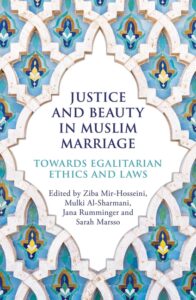
Rethinking Muslim Marriage Rulings through Structural Ijtihad

Within ‘Structural Ijtihad’, all juristic arguments on marriage and the validity of all derived rulings should be tested against four criteria: reasonability, justice, ethics, and effectiveness, all according to contemporary standards of justice and social realities. The author applies structural ijtihad to four contested areas of marriage (child marriage, rights and duties in marriage, divorce, and polygamy) to demonstrate the implementation of these criteria. In contrast to traditional fiqh, applying the structural ijtihad approach can preserve principles and standards within the tradition while adequately addressing today’s needs, contexts, and standards.

Theology, Ethics, Politics: Three Challenges for Islamic Reform

How should Islamic teachings relate to the specific conditions of modernity? Islamic Reform is the effort of Muslims to reconstruct Islamic teachings and practice in modern times. This lecture addresses the challenge of reforming Islamic doctrines in three related areas: theology, ethics and politics, with special reference to Shi`ism. It will be illustrated by critical reflections on concepts of religious authority (the position of the Imams), shari’a as an ethical tradition in dialogue with modernity, and the necessity of secularism in terms of separation of mosque and state.