
Tag: God

The Expectations from Islam

This lecture, The Expectations from Islam, examines how reformist Muslims define the scope and limits of religion today. Moving beyond traditional accounts of prophecy’s benefits, it asks what Muslims can legitimately expect from Islam. Reformist thought distinguishes enduring, transhistorical teachings from historically contingent rulings, identifying eight permanent domains: meaning to life, knowledge of God, the Hereafter, the unseen realm, morality, ritual, quasi-ritual, and limited social guidance. While Islam offers lasting principles of meaning, faith, ethics, and salvation, reformists emphasize that secular sciences and human reason address most worldly affairs.

The Problem of Evil

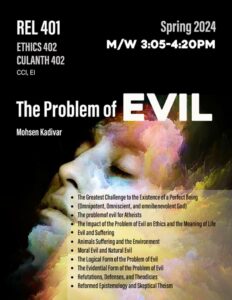
The 2024 course explores the key concepts and major issues of the problem of evil and its three types of responses. ‘The problem of evil’ as the challenge of reconciling the existence of a perfect being (Omnipotent, Omniscient, and omnibenevolent God) with the existence of evil, suffering, and sin has been one of the greatest intellectual problems. The epistemic question posed by evil is whether the world contains undesirable states of affairs that provide the basis for an argument that makes it unreasonable to believe in the existence of God.

Comparative Medieval Philosophy

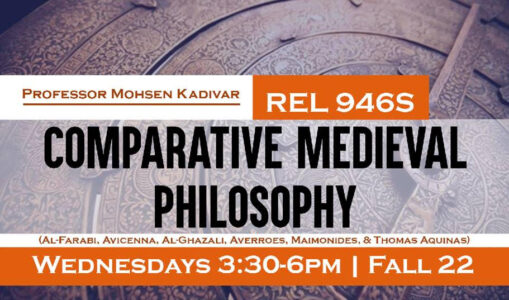
Medieval philosophy is a prerequisite to understanding the theology of Abrahamic traditions, metaphysics, philosophical psychology, and political philosophy. We will focus on six top philosophers: Alfarabi, Avicenna, al-Ghazali, Averroes, Maimonides, and Thomas Aquinas. After discussing general information about two translation movements, these distinguished philosophers, their works, and their philosophical innovations through the translation of a few of their major works, we will focus on comparative studies on three important subjects: God, creation, and freedom in three Abrahamic traditions, focusing on Avicenna, Averroes, Maimonides, and Aquinas in detail.

The Problem of Evil

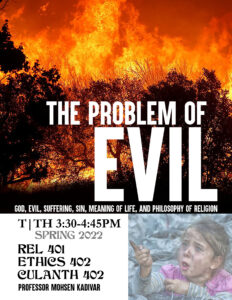
Spring 2022 Course: This is an introduction to the problem of evil that examines writings from ancient to present. ‘The problem of evil’ as the challenge of reconciling the existence of an absolutely perfect being (Omnipotent, Omniscient, and omnibenevolent God) with the existence of evil, suffering and sin has been one of the greatest problems of intellectual. The epistemic question posed by evil is whether the world contains undesirable states of affairs that provide the basis for an argument that makes it unreasonable to believe in the existence of God.