
Tag: Qur’an

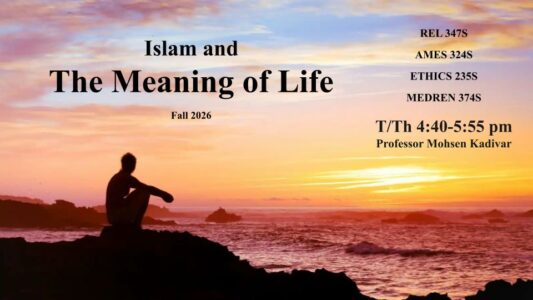
Islam & The Meaning of Life

The course explores how Islamic thought engages questions such as: What is the ultimate purpose of human existence? What is true happiness? How can human beings overcome alienation and find inner peace? How are faith and reason related in the search for meaning? What grounds moral obligations, justice, and human dignity? And how does belief in God shape the understanding of human destiny? The course approaches the meaning of life from three complementary perspectives within Islamic intellectual tradition: The Qur’anic perspective, the mystical perspective, and the philosophical and rational-theological perspective.
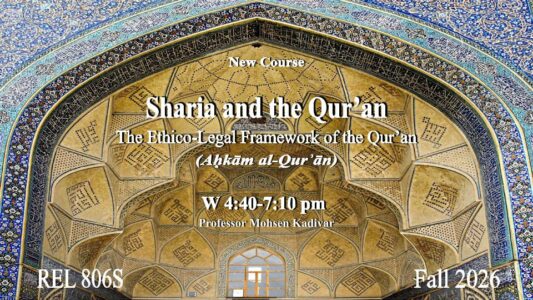
Sharia and the Qur’an

The course examines Sharia—the Qur’an’s ethical and legal frameworks—through primary sources. It thematically and chronologically analyzes verses on morality, ritual, and human interaction. Students explore the Aḥkām al-Qurʾān genre across legal schools in original languages using a holistic, historical-critical approach. Alongside jurisprudence, the course delves deeply into Qur’anic morality and the ethical implications of key terms such as mercy, justice, fairness, and dignity, emphasizing the Qur’an’s enduring ethical and legal principles. Students will learn to apply holistic and historical-critical methods that examine all related verses collectively and contextually.

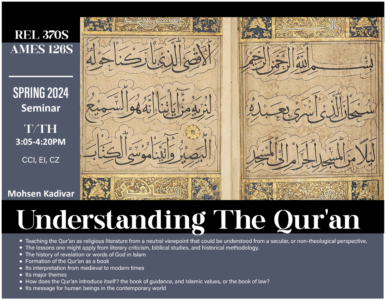
Understanding the Qur’an

The Spring 2024 course explores the history of revelation or words of God in Islam; the formation of the Qur’an as a book; its interpretation from medieval to modern times; its major themes; how the Qur’an introduces itself: the book of guidance, and virtues; the question of translatability; teaching the Qur’an as religious literature from a neutral viewpoint that could be understood from a secular/non-theological perspective; the lessons one might apply from literary criticism, biblical studies, and historical methodology; and its message for human beings in the contemporary world.