

Tag: scripture

International Conference on Islamic Perspectives on Prophecy and Revelation

The Department of Islamic Philosophy and Theology at the Al-Mahdi Institute in Birmingham, in collaboration with the Department of Religious Studies at Duke University, held an international conference on July 24–25, 2025, at Duke University. Although the event was affected by increasingly restrictive U.S. visa policies under the current U.S. administration, it was successfully held and was received well by the academic community. Organizing a conference on one of the most fundamental Islamic topics at a leading university during this challenging period in the US constitutes a significant achievement.

Islamic Perspectives on Prophecy and Revelation

The conference is crucial for fostering a nuanced understanding of how the ancient concepts of prophecy and revelation can be meaningfully integrated into modern thought and practice, helping to bridge the gap between traditional beliefs and contemporary intellectual concerns in these areas: The Nature and Function of Prophecy and Revelation in Islamic Thought; Prophecy, Revelation, and Epistemology; Prophecy, Revelation, and Philosophy of Language; Prophecy, Revelation, and Philosophy of Religion; Revelation, Unseen World, and Skeptical Theology; Prophecy, Revelation, and Comparative Abrahamic Traditions; and Contemporary Issues and Challenges to Prophecy and Revelation.

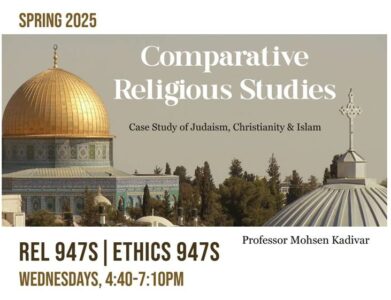
Comparative Religious Studies

The main goal of the seminar is a better understanding of the key concepts of Abrahamic traditions through comparative religious studies methodology. The seminar discusses theological subjects in the philosophical realm, descriptive not prescriptive, as a historian or an outsider of these traditions, not as an insider or believer. The discussions are purely neutral, critical analysis, historical, and based on modern scholarship of religious studies. Is the scripture infallible? Are Jews, Christians, and Muslims worshiping the same God? What is the initial capacity for violent interpretation in each tradition?