Tag: international law

Iran at a Crossroads: Protests and Political Futures

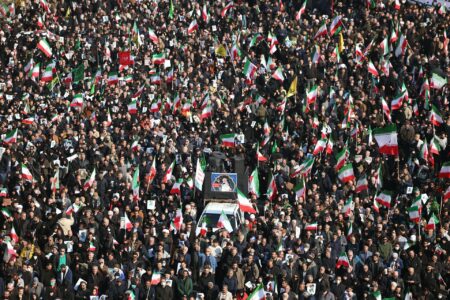
The Islamic Republic bears direct responsibility for the bloodshed, and its Supreme Leader is the principal accused. Opponents of the Islamic Republic can be divided into two groups. The national opposition adheres to three core principles: non-intervention by foreign powers, rejection of domestic tyranny, and a peaceful, democratic transition away from the Islamic Republic. According to the second type of opposition, the Islamic Republic must be overthrown at any cost—even through foreign intervention, and internal armed conflict. A referendum on the constitution of the future system must be held.

Amid federal crackdown on free speech, Duke professor and Iranian dissident Mohsen Kadivar remains vocal

Criticizing the repressive Islamic Republic, he is against U.S. military action in Iran. The Islamic Republic of Iran failed, but liberal democracy in the U.S. and Europe failed in the same way. There is no international law, no ethics. As the Iranian Constitution was violated, the U.S. Constitution was violated too. I’m supporting justice, freedom, and peace for the world, for the U.S., for Iran, for Palestine, and everywhere. I’m a global citizen. I belong to humanity. The only thing I want is to have a better, more peaceful world.

“We don’t need a Supreme Leader”

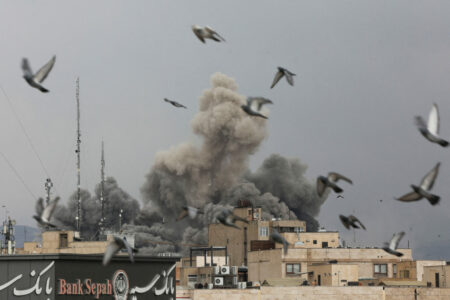
Kadivar evaluates the future of Iran, characterizing the current authoritarian theocratic regime as a failing state that has lost its popular legitimacy. While he acknowledges the government’s continued resilience against immediate collapse, he argues that ‘systemic reform’ or a transition to a secular democratic republic is essential for the nation’s survival. Condemning any foreign aggressions, Kadivar emphasizes that the recent illegal Israel-US attacks have temporarily bolstered Iranian nationalism, while true stability requires the abolition of the Supreme Leader’s office. A national referendum allows citizens to choose between various political models.

Only a Referendum Could Decide Iran’s Future

The Islamic Republic, once born of popular revolution, has evolved into an authoritarian state under Ayatollah Seyyed Ali Khamenei’s long rule, marked by repression, economic decline, and public disillusionment. Over 85% of Iranians oppose current policies, calling for a referendum on the system’s future, with growing support for a secular democratic republic. Despite hostility toward foreign aggression, especially from Israel and the U.S., Iranians reject regime change via external force. Israel’s recent attack on Iran, alongside atrocities in Gaza, underscores global failures of international law, human rights, and ethical governance.

The Grave Mistake of an American War on Iran

U.S. involvement in Israel’s illegal war against Iran runs counter to the core slogan of “America First” and marks a shift to “Israel First.” President Trump could repeat the mistakes of Presidents Eisenhower and Bush and go down in history as the first American president to launch a military attack on Iran. This would kill civilians and return many coffins to America. The United States, like Israel, would further its legacy in the Middle East as a symbol of injustice, lawlessness, immorality, and the violation of dignity, ethics, and humanity.

Shari’a, Fiqh, and the possibility/impossibility of Islamic Law

Shari’a (the Islamic style of life) will continue strongly. Fiqh will continue in worship and rituals, quasi-rituals, the principle of human interactions, and many parts of civil fiqh, including fiqh of the family, with observing gender equality and religious equality. Islamic law may be used in civil law and commercial law by observing four criteria (reasonability, justice, morality, and functionality). Other branches of law are counted as impossible. The cost of Islamizing them is much greater than leaving them to secular law while respecting Islamic ethics in these areas.