Tag: Iran

“We don’t need a Supreme Leader”

Kadivar evaluates the future of Iran, characterizing the current authoritarian theocratic regime as a failing state that has lost its popular legitimacy. While he acknowledges the government’s continued resilience against immediate collapse, he argues that ‘systemic reform’ or a transition to a secular democratic republic is essential for the nation’s survival. Condemning any foreign aggressions, Kadivar emphasizes that the recent illegal Israel-US attacks have temporarily bolstered Iranian nationalism, while true stability requires the abolition of the Supreme Leader’s office. A national referendum allows citizens to choose between various political models.
Memorial of Fraidoon Hovaizi

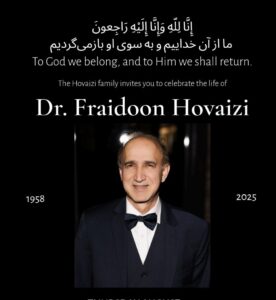
Death reminds us of the path that awaits every one of us; it is the inseparable counterpart of life. Each human being passes through four stages of existence: the fetal realm, earthly life, the world of the grave, and the Resurrection. Dr. Fraidoon Hovaizi—an economist and an Iranian Arab from Khuzestan—played a singular and enduring role in the Muslim community of Charlottesville. He offered valuable counsel and support to Arab, Iranian, and Afghan immigrants alike. He lived with joy, and he departed this world with the same serenity.

Only a Referendum Could Decide Iran’s Future

The Islamic Republic, once born of popular revolution, has evolved into an authoritarian state under Ayatollah Seyyed Ali Khamenei’s long rule, marked by repression, economic decline, and public disillusionment. Over 85% of Iranians oppose current policies, calling for a referendum on the system’s future, with growing support for a secular democratic republic. Despite hostility toward foreign aggression, especially from Israel and the U.S., Iranians reject regime change via external force. Israel’s recent attack on Iran, alongside atrocities in Gaza, underscores global failures of international law, human rights, and ethical governance.

Religion and Politics In Post-Revolutionary Iran

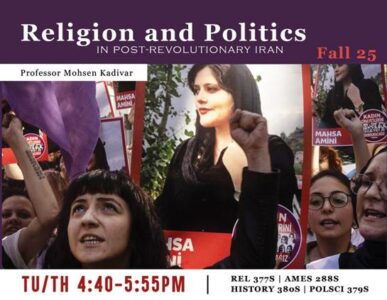
This course will narrate a fair and balanced critical and historical analysis, and is organized into five thematic sections: a brief overview of the relationship between religion and politics in Iran, an intellectual history of the Islamic Republic, examining the concept of the “sacred as secular” and exploring the dynamics of secularization within a theocratic system, the governance in the name of Islam, focusing on theology and theocratic rule in the Islamic Republic, and the revolt against theocracy: the Mahsa Movement and the feminist uprising against theocracy in Iran.

The Grave Mistake of an American War on Iran

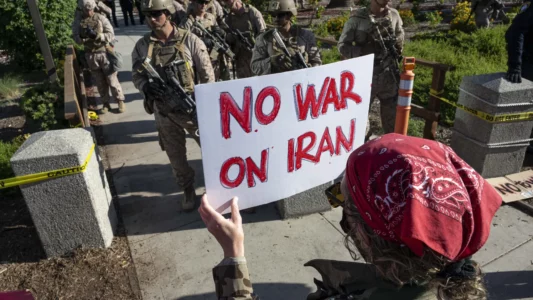
U.S. involvement in Israel’s illegal war against Iran runs counter to the core slogan of “America First” and marks a shift to “Israel First.” President Trump could repeat the mistakes of Presidents Eisenhower and Bush and go down in history as the first American president to launch a military attack on Iran. This would kill civilians and return many coffins to America. The United States, like Israel, would further its legacy in the Middle East as a symbol of injustice, lawlessness, immorality, and the violation of dignity, ethics, and humanity.

Solutions for the Immediate Rescue of Iran

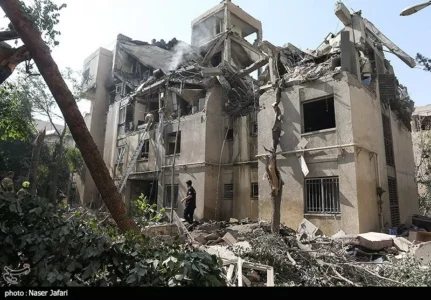
As part of its new Middle East strategy, Israel has launched a war against Iran using the most advanced American weaponry, which violates all principles of international law. In light of the harsh reality of global power coercion and their disregard for legal standards, and considering Iran’s national capabilities, we present the following proposals to the government and our fellow citizens: Call for a Temporary Ceasefire, Direct Negotiations with the United States, Flexibility on Enrichment, Reconciliation Between the Islamic Republic and the People, Holding a Referendum to Amend the Constitution.

Reflections on Israel’s War Against Iran

Israel’s aggression on Iranian soil must be unequivocally condemned from every perspective. Although Israel has pursued its objectives in the Middle East through military means, backed by highly advanced American and European weaponry, it has failed miserably in the realms of law, morality, and humanity. As a result, Israel is arguably the most hated country in the world. There is no doubt that the aggressor’s hold must be broken and the homeland firmly defended, regarding two principles: prioritizing public consent over governmental demands and respecting national capabilities.

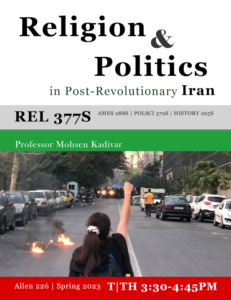
Religion and Politics in Post-Revolutionary Iran

What is the relationship between religion and politics in general and Islam and politics in particular? What does ‘political Islam’ or ‘Islamism mean’? What was Khomeini’s political thought? What does theocracy do with secularism and democracy? What is the role of election in a quasi-democratic regime? How did regime expediency secularize the administration? What is the relationship between civil law and Islamic law (sharia)? Why did the Islamic Republic of Iran transform from a competitive electoral to a non-competitive electoral authoritarian regime?

Listen to the Voices of Protesting Iran

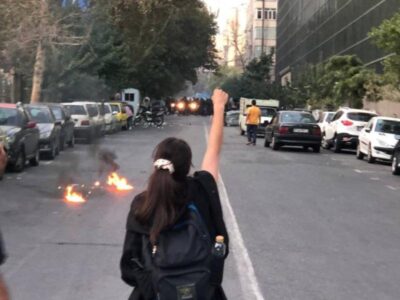
This country-wide revolt is against not only the brutal murder of Mahsa but also the essence of the so-called Islamic regime. The demand is loud and clear: an end to a theocratic regime whose multi-faceted violence against marginalized bodies is manifested in Mahsa’s death. Protestors are chanting “women, life, freedom.” Creating and sustaining such a continuum requires recognition of the intersectional struggles that women and other marginalized bodies are experiencing in countries such as Iran and under the current Islamic theocracy. We insist on a queer-feminist, anti-capitalist, and anti-fascist agenda.

Āqā ʿAlī Mudarris Ṭihrānī

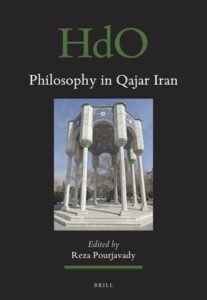
Āqā ʿAlī Mudarris Ṭihrānī (1818-1889) was one of the most distinguished commentators of Mulla Sadra in Qajar period and made a valuable attempt to complete Mulla Sadra’s philosophical project. Although his philosophical writings never became as popular as Sabzawari’s, his scrutiny of philosophical matters is remarkable. As is evident from his writings, Ṭihrānī was familiar with a great deal of what was the current writings on hikma. Although he was an adherent of Mulla Sadra’s philosophy and logic, he used a large number of contemporary philosophical sources in his writings.